
Parking and reverse manoeuvres, made simple
For many learners, the manoeuvres cause more anxiety than the drive itself. Yet they are the most controllable part of the test — slow, precise, and entirely trainable. Break them into steps and the nerves fall away.
The golden rule: slow car, quick eyes
Every manoeuvre rewards the same approach — move the car slowly while your eyes work quickly, constantly checking all around. Clutch control at walking pace gives you time to think; rushing removes it. If in doubt, slower is almost always better.
The turn-in-the-road
You will be asked to turn the car to face the opposite direction using forward and reverse gears, without touching the kerb or mounting the pavement. Ideally in three turns, though up to five is allowed.
Broken down:
- Full observation all around — this is where marks are won or lost
- Move forward slowly, steering briskly toward the far kerb, straightening before you reach it
- Reverse slowly, steering the other way, again straightening in good time
- Repeat until you are facing the other way, checking all around before each move
The reverse
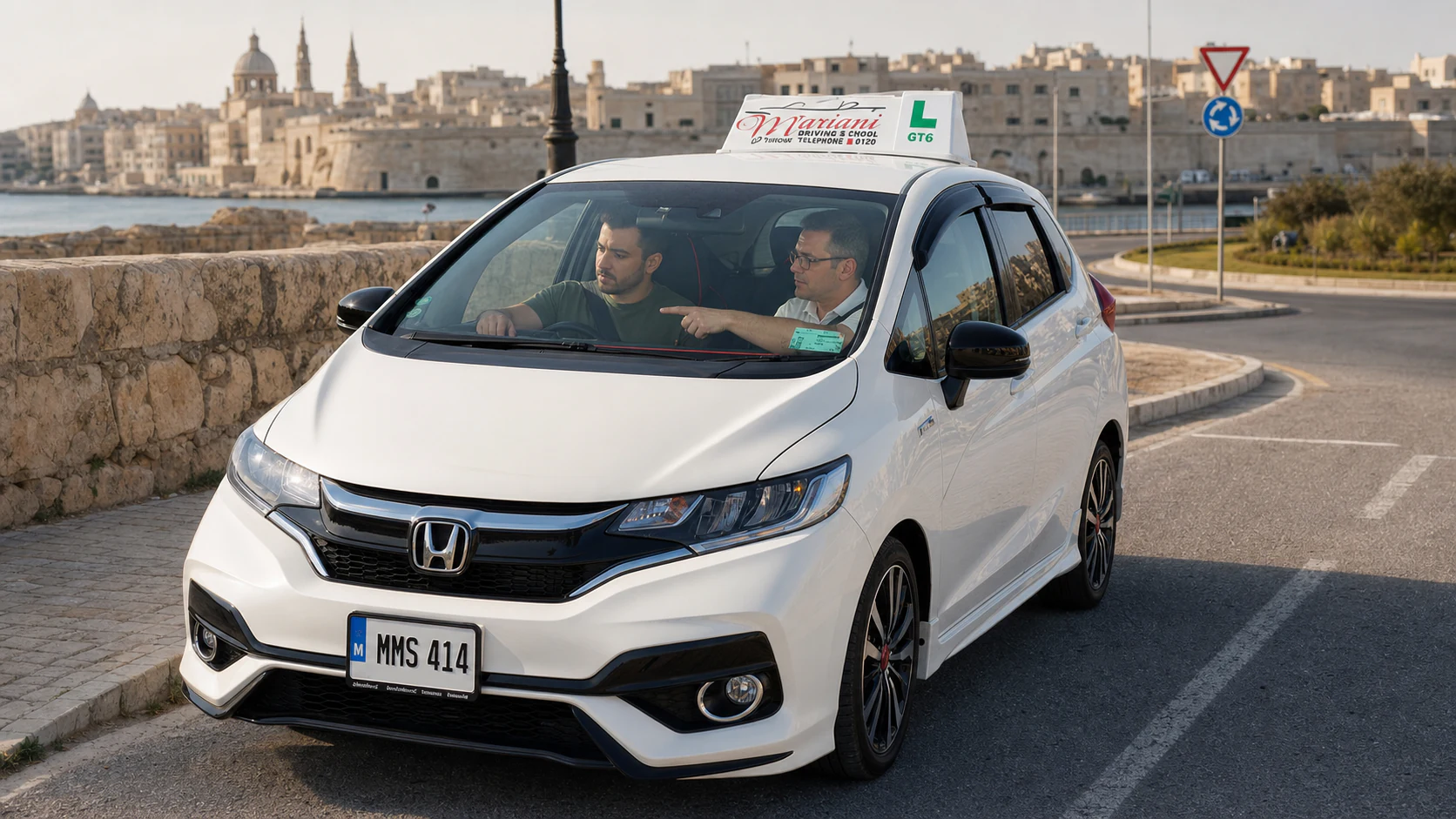
For a straight or corner reverse, the principle is the same: slow movement, constant observation — over your shoulder and through the mirrors — and small, smooth steering corrections. Look where you are going, not just where you are.
The parking exercise
Whether it is reverse bay parking or parallel parking, success comes from reference points and control:
- Approach slowly and set up your position deliberately
- Use the consistent reference points your instructor teaches you
- Keep observing throughout — a manoeuvre is not just about the car, it is about everything around it
- Adjust calmly if you are not straight; small corrections are fine
Practise until they are boring
The secret to manoeuvres is repetition. Practised enough, they stop being a test of nerve and become simple routine — something your hands do while your mind stays calm and observant.
Examiners are not looking for perfection. They are looking for control and awareness. Move slowly, keep looking, and correct calmly — that is a pass.