Which licence category is right for you? A, B and beyond
"Getting your licence" means different things to different people. The category you apply for determines exactly what you are allowed to drive — so it is worth understanding the main ones before you start.
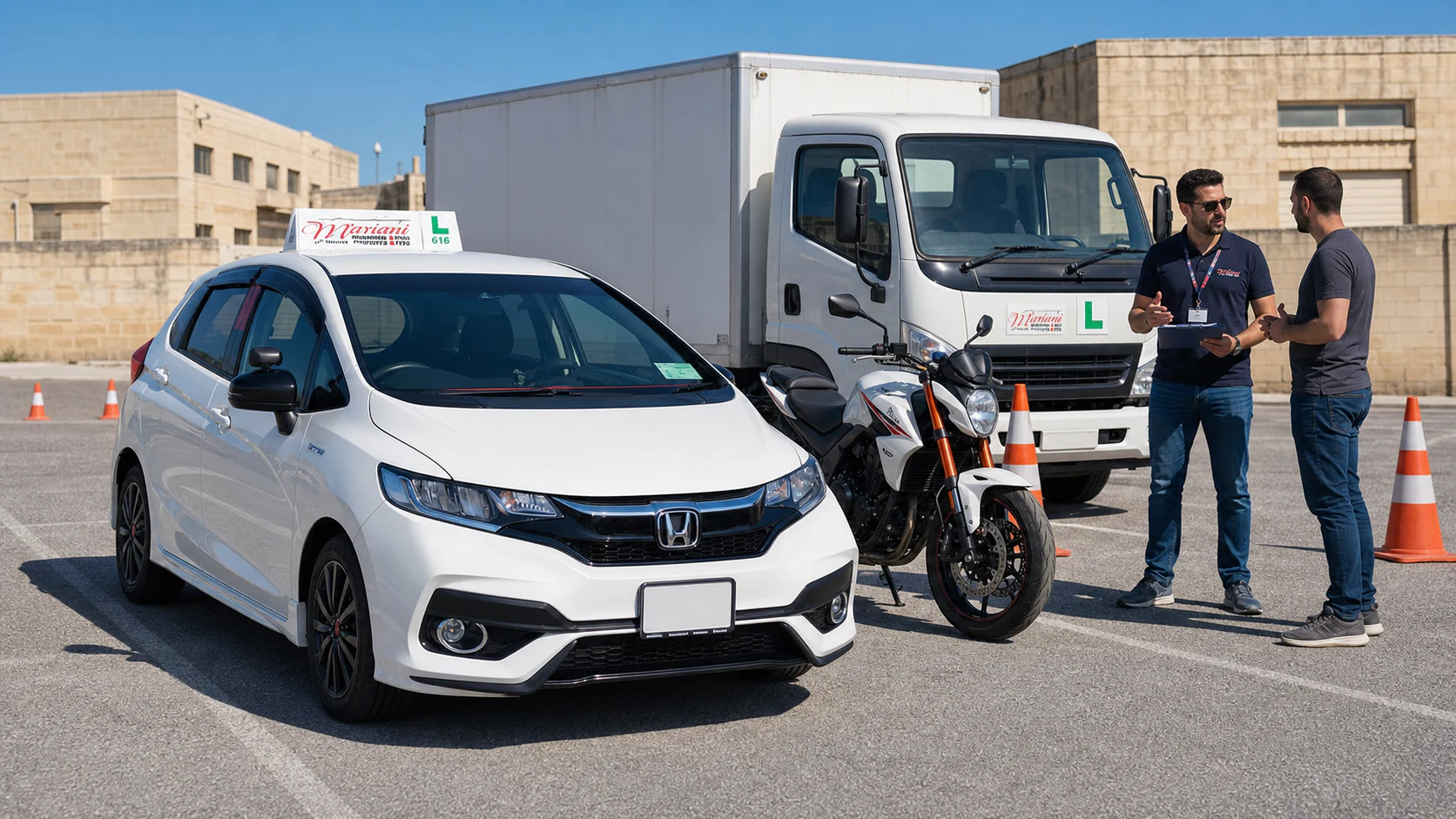
Category B — the car licence
This is the one most learners want. Category B covers standard cars and light vehicles up to 3,500 kg, with up to eight passenger seats. It is the licence for everyday driving, and the minimum age is 18.
For most people, "learning to drive" means Category B — and it is the foundation the majority of our learners start with.
The motorcycle categories — AM, A1, A2, A
Two wheels have their own ladder, based on engine power and age:
- AM — mopeds and light two-wheelers, from age 16
- A1 — smaller, lower-power motorcycles
- A2 — mid-power motorcycles
- A — full, unrestricted motorcycles
Each step up allows more powerful machines, with age and experience requirements between them. If you want to ride, your instructor will help you choose the right rung to start on.
Larger vehicles — C and D
Beyond the car lie the professional categories:
- Category C — large goods vehicles and trucks
- Category D — buses and coaches
These usually require you to hold a Category B licence first, and they open the door to professional driving careers. They demand additional training and testing, reflecting the responsibility of handling larger vehicles.
How to choose
Ask yourself one simple question: what do you actually need to drive?
- Commuting, family, everyday life → Category B
- Getting around on two wheels → an A-series category
- A career behind the wheel of a truck or bus → C or D, after your car licence
There is no need to collect categories you will not use. Start with the one that fits your life now — you can always add others later.
Not sure which category suits you? That is exactly the kind of thing worth a quick conversation before you apply. The right starting point saves time, money, and effort.